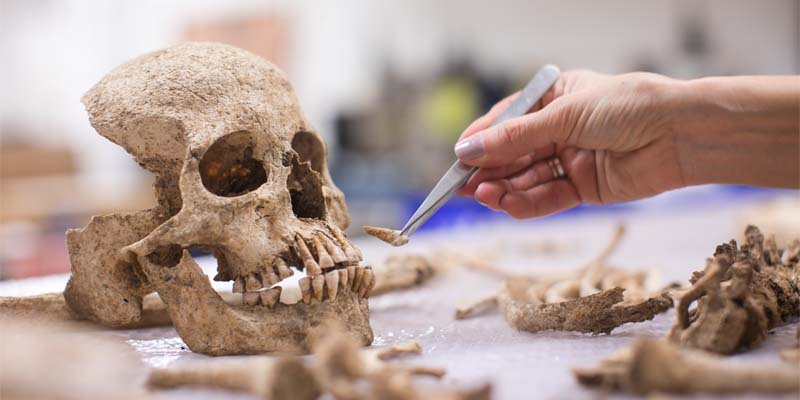
Archaeology


Photo

Course Details


  •   Intake:   January , September

  •   Mode Of Study:   Full-Time , Part-Time

  •   Course Length:  3-4 years (BA), 1-2 Years (MA)

  •   Graduate Employability:  72-84%

  •   Fee Range:   £15,000- £22,700/Year

  • Apply Now

Overview

Overview: Archaeology and Anthropology

Archaeology and anthropology jointly encompass the study of humanity from the origins of the human species to the present day. Both disciplines boast a rich history, with archaeology evolving from 18th-century antiquarianism and anthropology having roots dating back to the early years of colonial exploration. Today, these subjects employ a range of sophisticated approaches shared with the arts, social sciences, and physical sciences.

Students at the Department of Archaeology are part of a diverse research community. The course covers Archaeology, Assyriology, Biological Anthropology, and Egyptology. Its flexibility allows students to specialize from Year 1 or opt for a broad foundation before focusing on up to two subjects from the second year.

Honors Programs in Archaeology in the UK

On the undergraduate level, universities like Oxford offer this course as a two-year program. Each year is designed with three terms, and students will attend alternate weekly evening classes and some Saturday field trips, along with fieldworks and workshops. The first year concludes with a one-week program of practical fieldwork.

However, most universities design their courses as a three-year program following this format:

Year 1:

  • First University examinations: four written papers
  • 5000-word-long essay
  • Report on the fieldwork completed at the end of Year 1

Year 2:

  • Three 1000-word-long reports written in respect of the practical classes
  • Six written papers on the remaining core courses and options

Year 3:

  • 15,000-word dissertation

Courses taught at the undergraduate level may include:

  • Introduction to world archaeology
  • Introduction to anthropological theory
  • Perspectives on human evolution
  • The nature of archaeological and anthropological enquiry
  • Social analysis and interpretation
  • Cultural representations, beliefs and practices
  • Landscape and ecology
  • Urbanism and society, etc.

Master's Programs in Archaeology in the UK

In postgraduate archaeology courses, students cover subjects along with regular field trips and a dissertation. Courses may include:

  • Professional Skills in Archaeology
  • Advanced Project
  • Discovering the Past with Molecular Science
  • Advanced Zooarchaeology
  • Zooarchaeology
  • Funerary Osteoarchaeology
  • Researching the Historic Environment Online, and many more.

Study Archaeology in UK Universities

Here are some renowned universities, according to the QS and THE (Times Higher Education) ranking, that offer Archaeology courses:

  1. University of Oxford
  2. University of Cambridge
  3. University College London (UCL)
  4. Durham University
  5. University of York
  6. University of Edinburgh
  7. University of Sheffield

University of Reading

Entry Requirements for Archaeology Programs

Candidates should bear in mind that the graduate admissions process for Archaeology is highly competitive. The entry requirements typically include:

  1. IELTS: 7.0 overall with no less than 6.5 in each module.
  2. TOEFL: Minimum 90 overall, with no less than 23 in writing.
  3. PTE Academic: Overall – 62 with no less than 59 in each module.

As some English language proficiency tests (such as IELTS) results are accepted not more than two years older, the English Language test report is suggested to be valid on the start date of the course.

In order to take up a place on this course, one must be able to demonstrate English language proficiency at the University’s standard or higher level. This pre-sessional course will work as a progression route to the degree, and candidates will get a chance to learn academic English in the context of the desired subject area.

Academic Qualifications for Archaeology Programs

Undergraduate Requirements:

  • At least A-levels or equivalent.
  • Applications from mature students (over 21) might not have gone on from school to take level 3 qualifications.

Postgraduate Requirements:

  • Candidates with an Honours degree in Archaeology with a 2:1 standard, or without an overall 2.1 but with 2.1 results in their final two years of study from a recognized university in a relevant discipline will be preferable, but not limited to.

All applications are assessed by a committee of academic practitioners and recruiting officers of universities. Applicants will include a CV (Resume) or evidence of professional registration as part of their application. A 4000-character statement of purpose (SOP) along with all certificates and academic documents will be attached with the Language proficiency certificate.

Fees and Scholarships for Archaeology Programs

Terms Expenditure (for overseas students)
Tuition fees Approximate £15,000- £22,700 /Year
Additional costs Approximate £15-40 for undergraduates and research students.
Conditional Deposit Scheme Approximate £2000 depending on university requirements.
Accommodation Starts from approximately £171.43/week; depending on the living facilities.

The UK universities offer various scholarships, funding, and on-campus jobs in postgraduate studies for international students. Scholarships are available based on individual qualifications that match university criteria. Some available scholarships include:

  • Commonwealth Scholarships for Developing Commonwealth Countries
  • Commonwealth Masters Scholarships
  • British Chevening Scholarship
  • Academic Excellence Scholarships
  • British Council scholarship for women in STEM
  • Many more university and departmental scholarships

Additionally, students may benefit from schemes such as the Early Bird Discount and Save the Student, depending on university funds and criteria.

Archaeology Course Benefits:

  • Graduates often pursue careers in the heritage sector, including commercial archaeology, cultural resource management, museums, and non-governmental organizations.
  • Universities have extensive ties with local heritage organizations, providing opportunities to network with prospective employers.
  • Postgraduate degree holders can choose to continue their academic career with a PhD in archaeology.

Career Opportunities in Archaeology:

  • Archaeologist
  • Conservator
  • Heritage manager
  • Historic buildings inspector/conservation officer
  • Museum education officer
  • Museum/gallery curator
  • And beyond.

For those inspired by ancient artifacts, historic landscapes, and intrigued by new discoveries about our shared human past, choosing archaeology as a career path is a rewarding option.

Employability after Art Gallery and Museum Studies

According to data from UK talent, a newly qualified curator in a gallery, whether located inside or outside of a city or smaller practice, may expect to earn around £25,605 yearly, with larger cities often offering higher salaries. An undergraduate or postgraduate degree in this field is also beneficial for those interested in teaching art and curation.

Job Opportunities after Art Gallery and Museum Studies:

  • Academic Research
  • Collections Management
  • Curatorship
  • Exhibition Development
  • Program Management
  • Museum Research
  • And beyond

Individuals seeking specialized skills will find that studying Art Gallery and Museum Studies provides a comprehensive understanding of the wide-ranging knowledge required for this complex field of history and heritage preservation.

FAQs - Archaeology:

  1. How do I become an archaeologist in the UK? Candidates who have at least A-level qualifications or an equivalent can apply for undergraduate studies in Archaeology. A 2.1 degree in honors level is preferable for postgraduate studies.

  2. Are archaeologists in demand in the UK? According to the Chartered Institute for Archaeologists (CIfA), the demand for archaeologists is reflected in starting salaries, which can go up to £25,000 per year. With work experience and expertise, salaries can reach at least £41,000 per year.

  3. Which country is best for studying archaeology? The United Kingdom is considered one of the best destinations for studying Archaeology. Renowned universities like the University of Oxford, University of Cambridge, UCL, Durham University, and the University of Reading offer Archaeology courses.

  4. Are archaeologists in demand globally? Graduates often find opportunities in the heritage sector, including commercial archaeology, cultural resource management, museums, and non-governmental organizations. Extensive ties with local heritage organizations provide networking opportunities for prospective employers.

  5. Is it hard to become an archaeologist? Becoming an archaeologist can be challenging, but with proper schooling and guidance, a structured career path in the industry can be achieved.

Find a University

Choose Your Course


INTERESTED TO STUDY IN ABROAD?

LET'S TALK TO OUR EXPERT COUNSELLORS

We will only use your details to communicate with you about studying abroad (Required)

Ready for Free Consultations on
Any Educational Solutions?